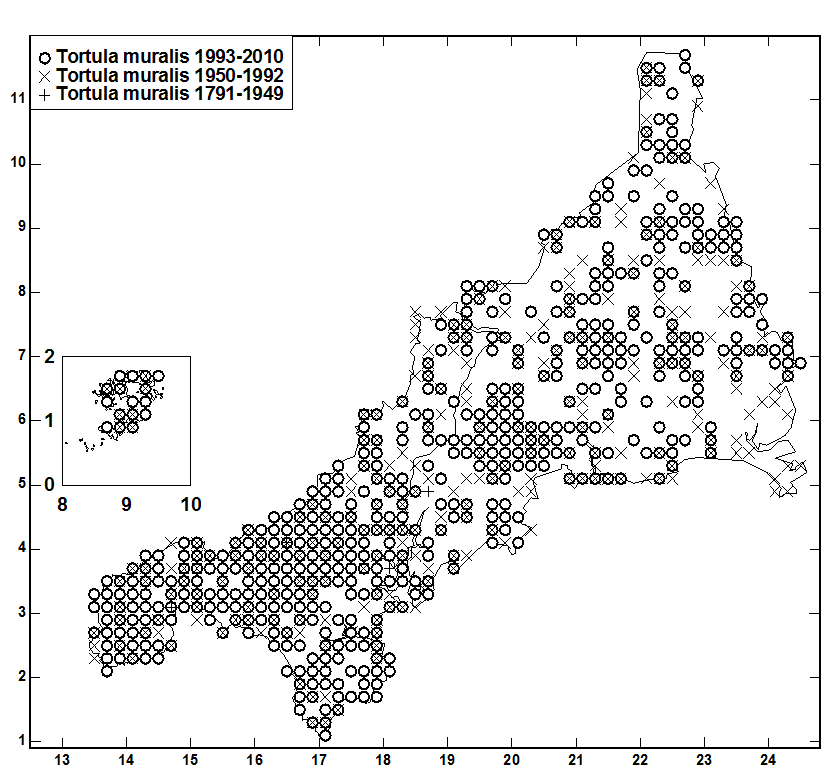
*1: Mylor, 1839, EAW
(TRU) (Paton 1969: 720).
*2: Trehane near
Probus, 1861, ES (TRU) (Paton 1969:
720).
Grows in patches, often small but sometimes
extensive. Notes on habitats in C&S are as follows.
Usually on hard calcareous substrates including concrete,
mortar, bricks, asbestos-cement and other calcareous masonry,
on horizontal, inclined, vertical or overhanging surfaces that
are normally dry and free-draining (although some seepage of
water is tolerated). Typically in open or in slight to
moderate shade, occasionally in heavy shade (e.g. in woodland)
but plants then poorly grown and non-fertile. Commonly on
walls, buildings, bridges, graves and other masonry, including
isolated patches of concrete; also often on fragments of brick
or masonry lying on ground. Occurs almost anywhere that
appropriate habitats appear, including widely isolated
concrete structures or debris in fields, so it is evidently a
remarkably efficient colonist from spores. Almost unrecorded
from 'natural' rock habitats in Cornwall,
although seen once on granite boulder just above sea-cliff.
Also several records of small patches on granitic boulders in
'hedges' or e.g. on granitic gatepost. Occasionally on thin
hard soil on walls, and a few plants recorded with other small
acrocarpous mosses on firm calcareous soil near base of church
wall. A few unusual records of small amounts on hard soil on
waste-ground; seen once on unshaded, firm, sandy soil of slope
near coast. Once on old slag on mining ground near coast.
Tolerates salt-spray, occurring e.g. on harbour wall at
Newlyn. Common associates include Barbula convoluta, Barbula unguiculata,
Bryum dichotomum,
Bryum capillare, Bryum radiculosum, Didymodon rigidulus,
Grimmia pulvinata,
Rhynchostegium
confertum, Schistidium
crassipilum, Zygodon viridissimus
var. viridissimus; others
recorded include Sciuro-hypnum
populeum, Didymodon
luridus, Gyroweisia
tenuis, Pseudocrossidium
revolutum, Scorpiurium
circinatum, Trichostomum
brachydontium.
At Trevarno some shaded plants on part of old wall
of mortared-stone had hair-point of leaves virtually lacking
(the character of var. aestiva). Most of
those nearby had short hair points and some individual plants
had short points on just a few leaves. Since various
intergradations seemed to be present there seemed little value
in recording var. aestiva
here.
Commonly c.fr.: capsules immature 1-7 [8, 9],
10-12; dehiscing [1-4], 5-10, [11, 12]; dehisced [1-4: old],
6-12.