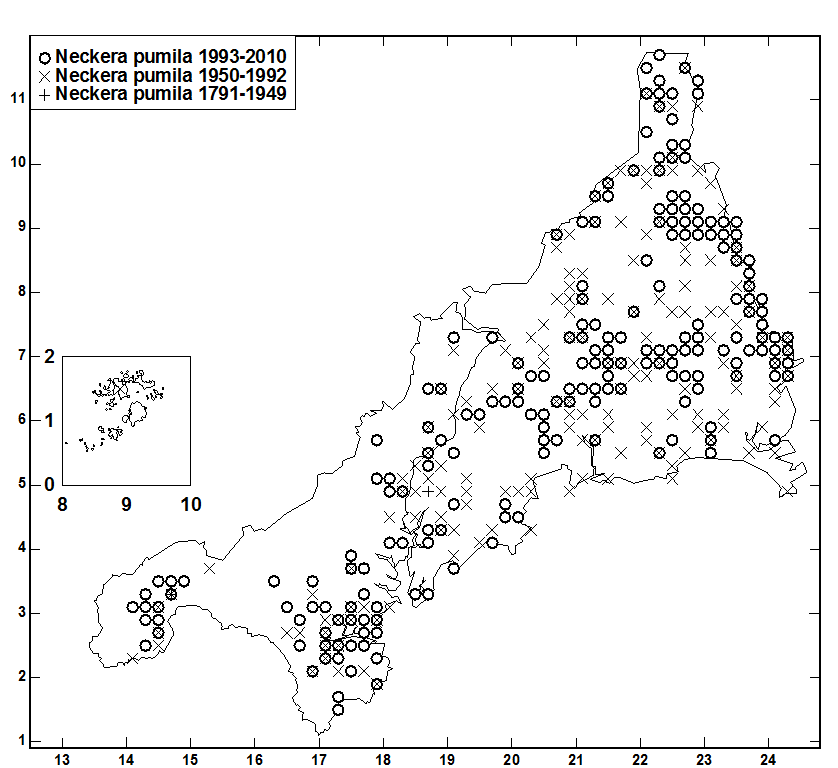
*1: Trevaylor
Valley, Penzance, 1866, WC
(PNZ) (Paton 1969a: 744).
*2: Trehane, W. of
Probus, 1861, ES (TRU) (Paton 1969a:
744).
Habitat notes from C&S are as follows. Normally
seen only as an epiphyte on bark of varied trees and shrubs,
with records from Ash, Beech, Blackthorn, Grey Willow, Elder,
Hazel, Sessile Oak, Sycamore and Wild Cherry; three times on
Cotoneaster
integrifolius;
once each on Abies
alba, Gorse and Hydrangea macrophylla.
In old ornamental gardens colonises range of exotic trees (at
Trengwainton seen on Acer palmatum, Magnolia campbellii
and M. fraseri; at Trebah on
Cornus kousa, Eucryphia glutinosa
and Pittosporum
tenuifolium). Mainly in groves of trees and woodland,
especially old woodland sites on good soils, but also in
scrub, old gardens, once in old Grey Willow carr, once in Grey
Willow scrub (a bit seen in hollow of small old quarry on
hilltop near Boswarva). Apparently prefers light to moderate
shade and rather sheltered sites; recorded up to 2.5 m above
the ground, but probably extends higher. Often on thin
branches in humid situations as well as on trunks. Frequently
on bark within flood-zone of R. Tamar (several times seen
associated with Dendrocryphaea
lamyana). Single atypical record of well grown patch on
rock: on almost unshaded corner of a granitic block ca 20 cm above water
of a stream.
Frequent associates include Cololejeunea
minutissima, Frullania dilatata, Homalothecium
sericeum, Hypnum
andoi, Hypnum
resupinatum, Microlejeunea ulicina,
Metzgeria furcata,
M. consanguinea, Neckera complanata, Orthotrichum affine,
Radula complanata,
Ulota bruchii, Ulota crispa, Zygodon
conoideus.
Often in rather small quantity, but sometimes
forming substantial patches. Commonly with filiform axillary
branches (which are sometimes abundant) that presumably serve
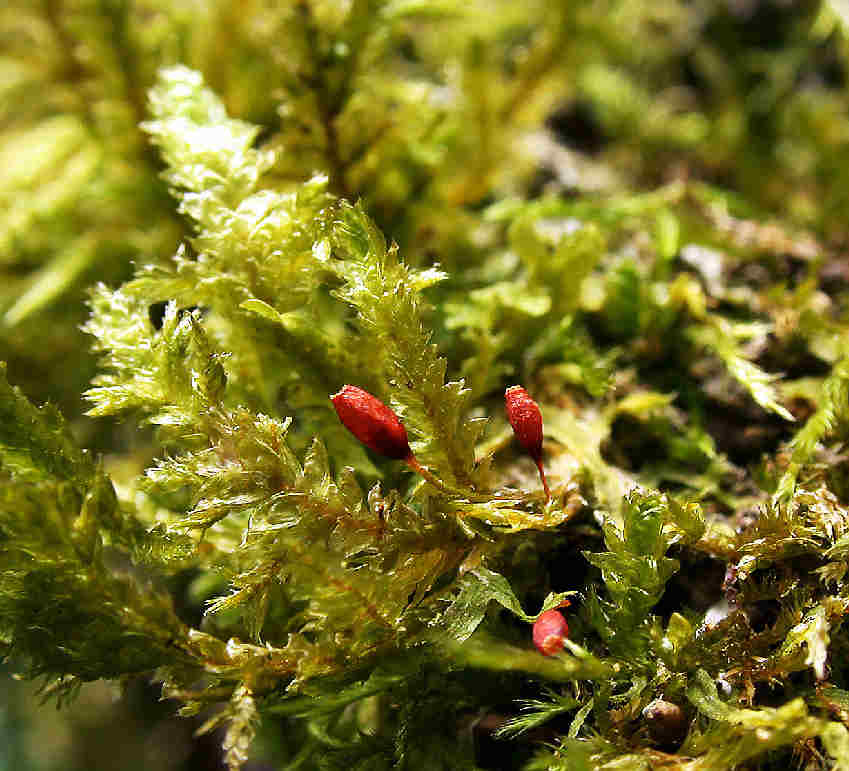
as propagules. Seen c.fr. four times (few capsules each time):
capsules immature 1, dehisced 1, 5, 8.