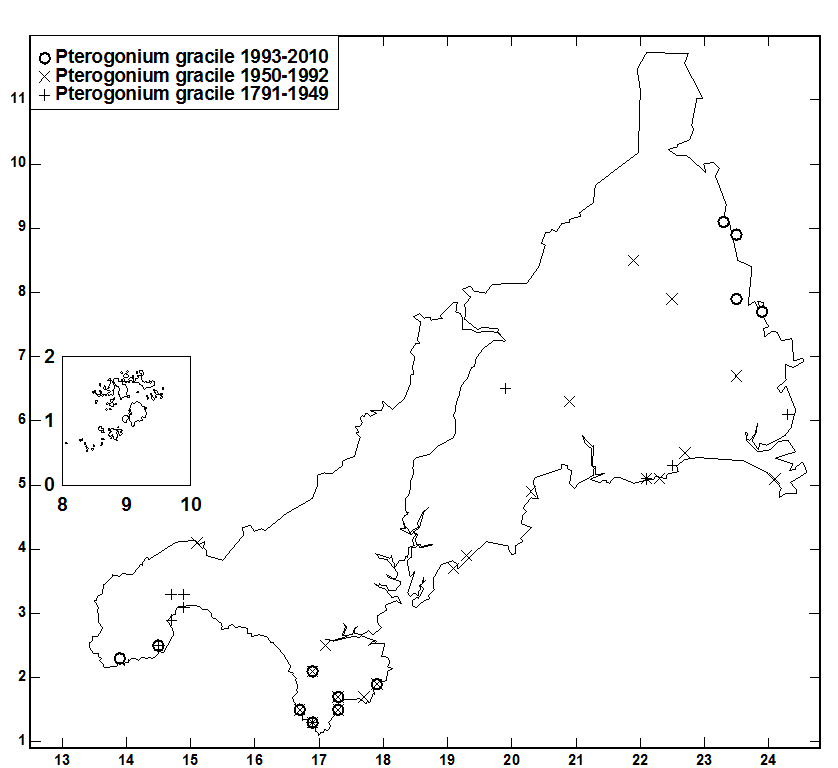
*1: Tolcarne, Newlyn,
1844, AG (PNZ) (Paton 1969a:
744).
*2: Treliver, St Wenn,
1871, RVT (B) (Paton 1969a:
744).
Grows as patches or mats, sometimes extensive and
often partly intermixed with other bryophytes. Recorded mostly
on basic rock, often on steep or vertical faces but sometimes
also on horizontal substrates, occasionally where there is a
thin layer of accumulated soil or humic detritus. The majority
of records were from serpentinite of the Lizard pen., but with
two from granite, one each from slate and gabbro, and two from
bark low on old Ash trees. It occurs variously in open sunny
places (e.g. on heathland and coastal slopes), lightly shaded
(often by Ash or Sycamore trees), and sometimes in moderate to
rather heavy shade of woodland. Most records on rock are from
small outcrops or large boulders, with one on boulders in
scree, but a few are from rocks in old walls and one from a
field gatepost. It apparently shows a preference for humid
situations since several of its sites were in or beside
streams, one on a tree was in upper part of flood-zone near R.
Tamar, and several others were close to
coasts.
Associates recorded frequently include Frullania dilatata, Frullania
tamarisci,
Homalothecium sericeum, Isothecium myosuroides
var.
myosuroides,
Neckera complanata; rarely Lejeunea mandonii,
Porella
arboris-vitae
Not seen c.fr. and sporophytes
never reported fromCornwall (elsewhere in British Isles sporophytes 'very scarce,
maturing in February': C.D. Preston in Hill et al. 1994:
216).