*1: Near Roseworthy,
1862, WC (PNZ) (Paton 1969a:
735).
*2: Looe harbour,
c.fr., 1963, CCT (Paton 1969a: 735).
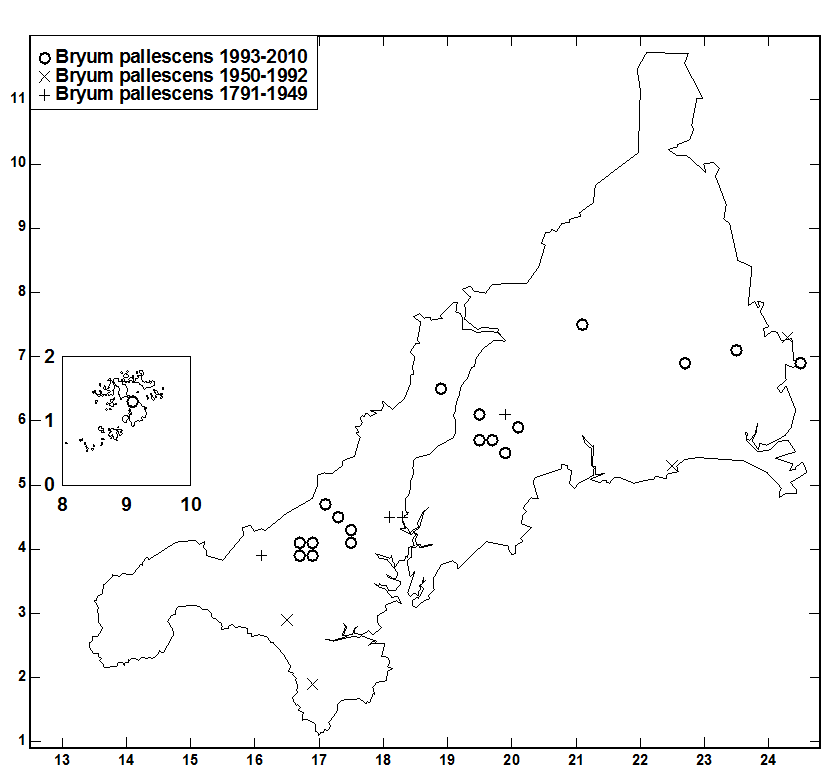
Numerous records, but undoubtedly under-recorded,
since only determinations based on study of plants with mature
capsules and spores are reliable. However, among
similar-looking Bryum spp., only B. pallescens was
identified from obviously metal-contaminated substrates in
Cornwall, so that numerous patches seen on mine-spoil with
capsules lacking or immature should probably be referred to
this species as should many patches on concrete below
galvanised iron of steps, railings, currogated roofing etc.
All plants seen during the present study were
synoicous (none autoicous), but dissection of several
perichaetia was commonly necessary to find even a few
antheridia, since a majority contained only archegonia). A few
populations were
atypical, e.g. those from Greensplat
(DTH 01-50) have endostome with short cilia
only. More often some cilia are long and appendiculate, others
long and nodulose, a few short.
Typically forms patches, often pure and 10 cm or
even 2 m across, so doubtless persisting in same place year
after year. Notes on habitats in Cornwall are as follows.
Commonly forming substantial patches on old concrete and firm
soil below bases of old galvanised-iron sheds, such as those
used or formerly used to store explosive in quarries and near
mines, unshaded to partly shaded, often associated with Weissia controversa
var. densifolia,
but usually no other plants close by. Also on mine-spoil
receiving drainage from areas of concrete, e.g. near buildings
at South Crofty Mine. Treviscoe: on gritty soil beside
concrete at base of galvanised iron steps, near china clay
settling tank, slightly shaded. Whitemoor: patch on unshaded
low bank of china clay spoil with Pohlia flexuosa and Weissia controversa
var. densifolia,
close to stored metal pipes and machine parts. E. of Bugle:
thin soil on concrete block resting on slope of china clay
spoil lightly shaded by scrub. Pool: patches on old horizontal
concrete beneath fence of galvanised iron wire, unshaded.
Okeltor: plentiful in patches and lawns on silty soil (old
mine-spoil) on tops and sides of ruined walls of mine
buildings, in open or partly shaded. On laneside stone wall
with Weissia
controversa var. densifolia, almost
unshaded. W. Chyverton Mine: presumably this sp. plentiful as
often substantial patches on 'lithosol' of metalliferous
mine/quarry spoil. Goss Moor: on unshaded soil of open area in
acid grassland on old landfill site, probably on toxic
substrate. On unshaded old bonfire site on copper-mine
spoil.
Chemical analyses of its substrates
show it can tolerate high levels of Zn and also of Cu and Pb
at Cornish localities:
Analyses of substrates from
localities in Cornwall
(metal concentrations given as µg/g dry
weight):
LOCALITY (N samples) Cu
Pb
Zn
pH
Source
South Crofty, vc1 (3)
133-350
73-206
1029-2852
6.6-7.0
Sullivan (2004)
East
Bassett, vc1 (1)
1668
337
2502
7.8
Sullivan (2004)
Poldice
Valley, vc1 (3)
1044-2128
150-412
524-2168
7.2-8.0
Sullivan (2004)
West
Chyverton, vc1 (3) 81-707
930-6938
21326-19673
6.4-7.4
Sullivan (2004)
Greensplat, vc2 (2)
26-517
128-2074
833-9298
5.6-6.0
Sullivan (2004)
Hantergantick, vc2 (3)
18-104
60-199
447-8088
6.5-6.7
Sullivan (2004)
Commonly (?) c.fr. [only recorded with mature
capsules]: capsules immature 2, 3, 5, 11; dehiscing [1], 2, 3,
5, 6, [9, 11, 12]; dehisced [1: old], 2, 3, 7, 9, 10, 11, 12.
Capsules full of spores often fail to dehisce properly, some
seen with germinating spores (e.g. 11,
Greensplat).