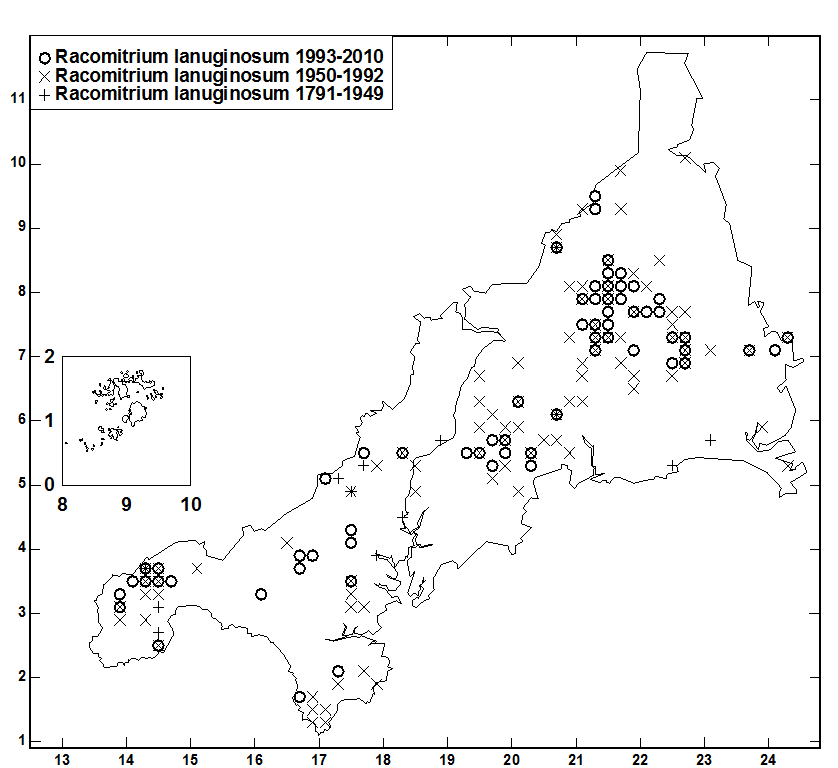
*1: St Enoder, 1861, ES
(TRU) (Paton 1969a:
730).
*2: Helman Tor, 1890,
RVT (B) (Paton 1969a:
730).
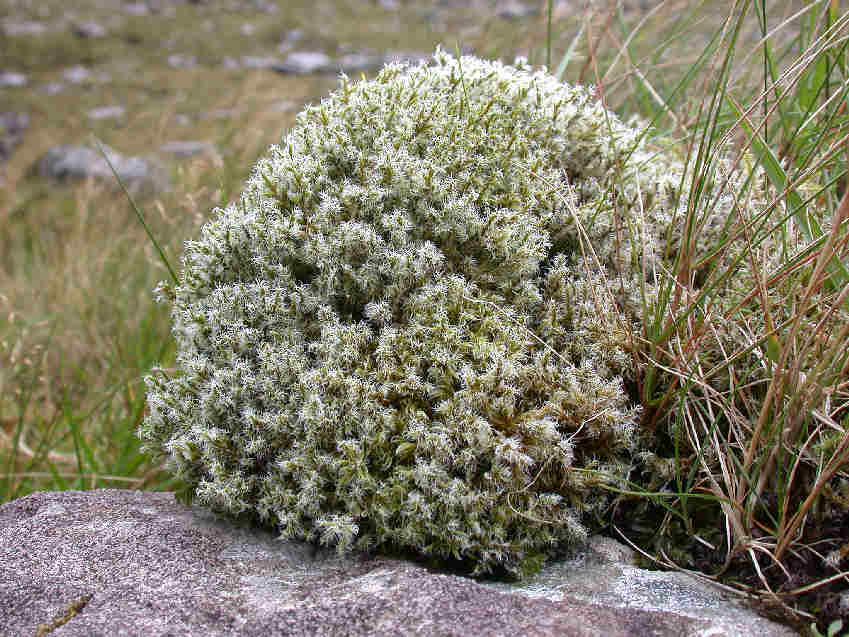
Forms patches or mats, sometimes wefts. Habitat
notes from Cornwall are as follows. Occurs on a variety of
acidic substrates that may be rather wet to free-draining, but
mainly peat or humic soils, lithosols and granitic rocks
(where often growing directly on rock or in tiny crevices).
Rather patchy in its occurrence and sometimes locally
plentiful, mostly in granitic regions, in heathland, mires or
among rocks (boulders, outcrops, walls, on 'hedges').
Generally grows unshaded, so that in heathland where
vegetation is tall it is restricted to barer patches or rocks,
but it often colonises burnt heathland soils. Locally abundant
on heavily grazed areas at edges of some mires and occurs with
sphagna on hummocks within some mires. Colonises heathy ground
over old metalliferous mine-spoil and sometimes an early
colonist of china-clay quarries and their spoil. A single
record of small patches on sloping granite of buttress 2.5 m
above ground on NE. corner of church. Unusual record of small
amount growing on old roofing felt dumped amongst mine-spoil.
Associates recorded on ground include various sphagna, Calluna vulgaris, Carex binervis, Erica tetralix; on
rock Racomitrium
heterostichum.
One DTH record c.fr.: capsules immature 12. There
are a few older records of capsules (3, 6: Paton 1969:
730).