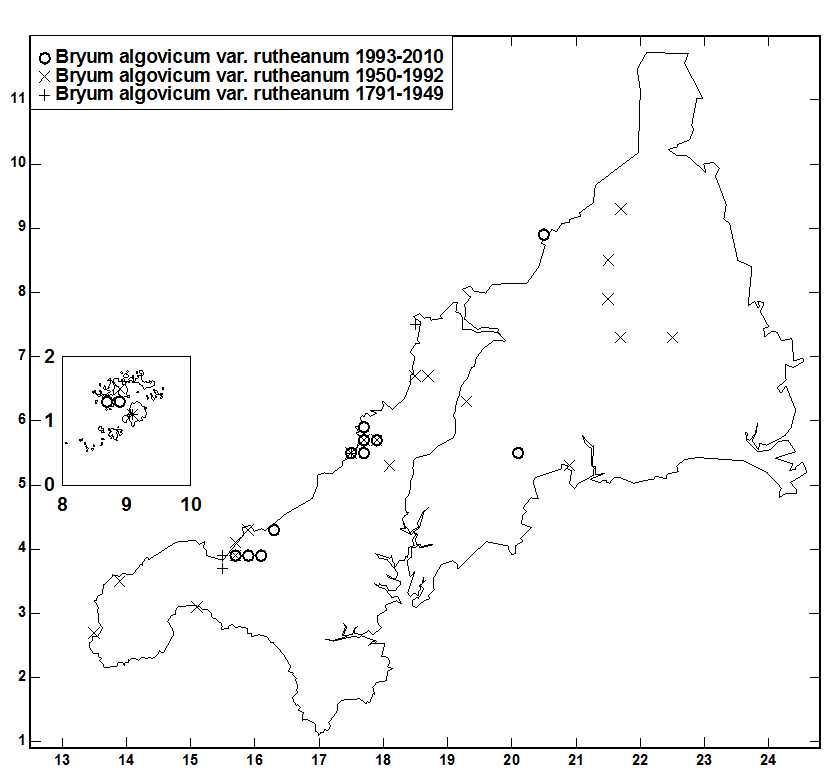
*1: Constantine Sands, St Merryn,
1889, RVT (B) (Paton 1969a:
734).
*2: Heath below the
Cheesewring, Stowes Hill, Bodmin Moor, Apr. 1961, JAP
(BBSUK) (Warburg 1962: 373, Paton 1969a:
734).
A few records were of plants determined only as the
species because the synoicous sexuality of var. rutheanum was not
established. These are mapped as var. rutheanum because the
autoicous var. algovicum is unknown
in Britain; dioicous plants reported from Scotland (A.C.
Crundwell in Hill et
al. 1994: 93) are of uncertain significance.
Grows as low lawns or in smaller patches. Habitat
notes from C&S are as follows. Characteristic of
calcareous sand or sandy soil among semi-fixed and stable
sand-dunes and short grassland over calcareous blown sand on
coastal slopes, growing in unshaded places with short, thin
grassland or cover of mosses, less often part shaded by Ammophila arenaria or
other grasses. Other associates recorded include Bryum capillare; also
various low grasses and herbs. A few records inland are from
damp sand beside a drying pool in sand quarry (at landward
edge of dunes, Loggans Moor), coastal sand dumped near ruins
of buildings (NW. of Reskadinnick), on calcareous gravel and
masonry debris at a disused railway station (near Roseworthy),
and on an unshaded old gravelly track, with other low mosses
(Ruddlemoor).
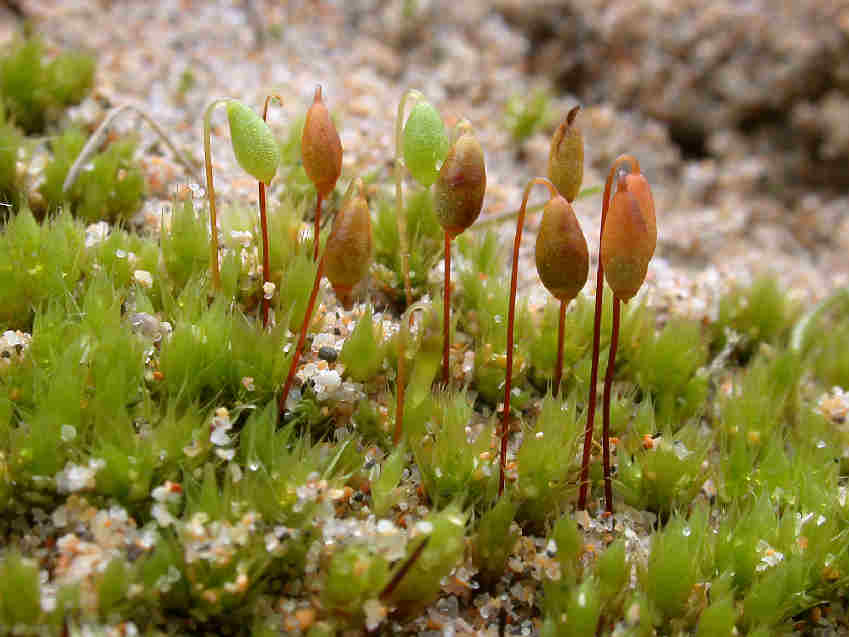
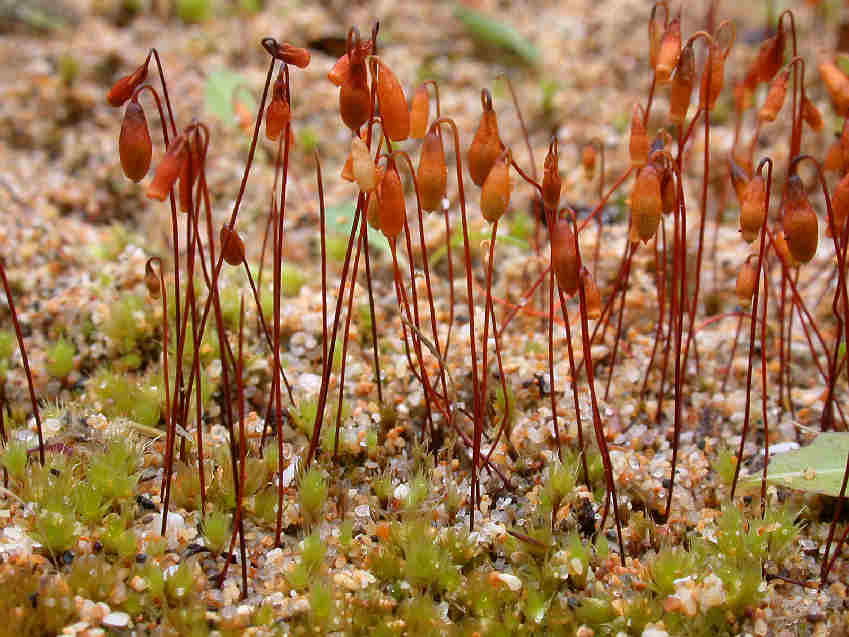
Commonly c.fr. [but only recorded with mature
capsules]: capsules immature 4; dehiscing 5-7; dehisced
7.