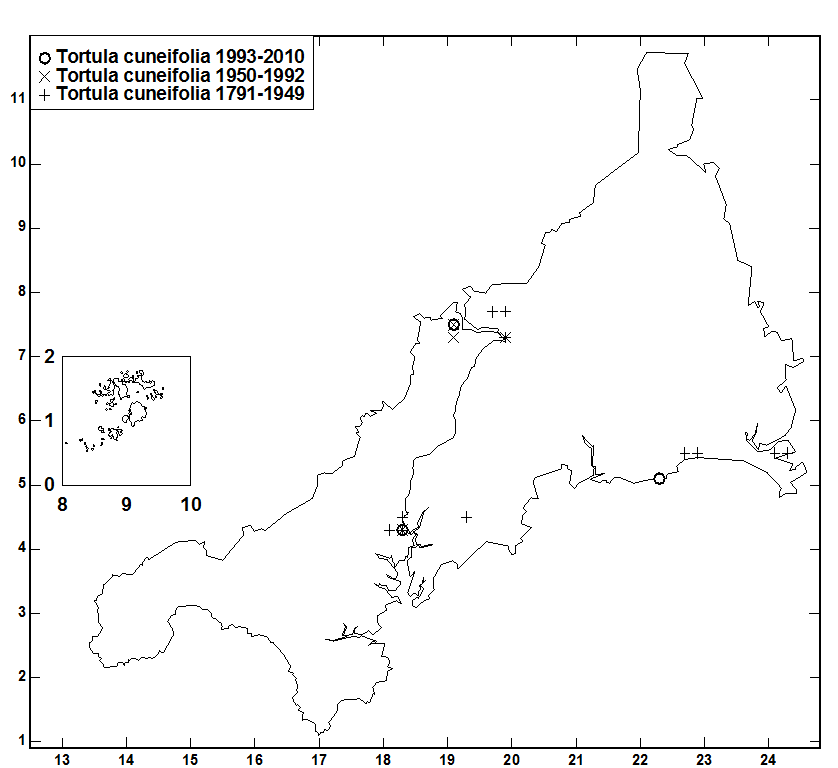
*1: Near Truro, 1862,
WC (PNZ) (Paton 1969a:
720).
*2: Road from Torpoint
to St
John, 1821, JST (RAMM)
(Paton 1969a: 720).
This species shows evidence of long-term decline in
Britain,
with loss from all inland sites; the coasts of Cornwall and Devon are now its stronghold (see Atlas
2: 227).
Three DTH records are as follows. Sunny Corner (NE.
of Malpas): among other low mosses on thin soil (<2 cm)
overlying crumbling shaly/slaty rock at angle of 70-80º on
part of steep roadside bank facing SSW. near edge of creek,
almost unshaded. Growing here as small patches and scattered
plants associated mainly with Tortula atrovirens,
also with Bryum
dichotomum, Grimmia
pulvinata, Zygodon
viridissimus var. viridissimus and
immature plants of Umbilicus rupestris.
NW. of Dennis Hill (near Padstow): small patch among Bryum capillare and Tortula viridifolia on
thin sloping soil over ledge on slaty rock of bank (side of
Cornish hedge) beside farm track, facing E. and almost
unshaded. Other associates within 5 cm were Kindbergia praelonga
and seedlings of Cerastium sp. and Umbilicus rupestris;
additional spp. at 5-10 cm away were Cochlearia danica, Galium album, Lolium perenne and a
seedling of Sonchus
sp. Talland: on thin mainly bare soil over unshaded slaty rock
in small old quarry near coast; associates included Barbula unguiculata;
Tortula canescens
was present nearby.
Commonly cfr; capsules immature 1-4; dehisced (3
old).