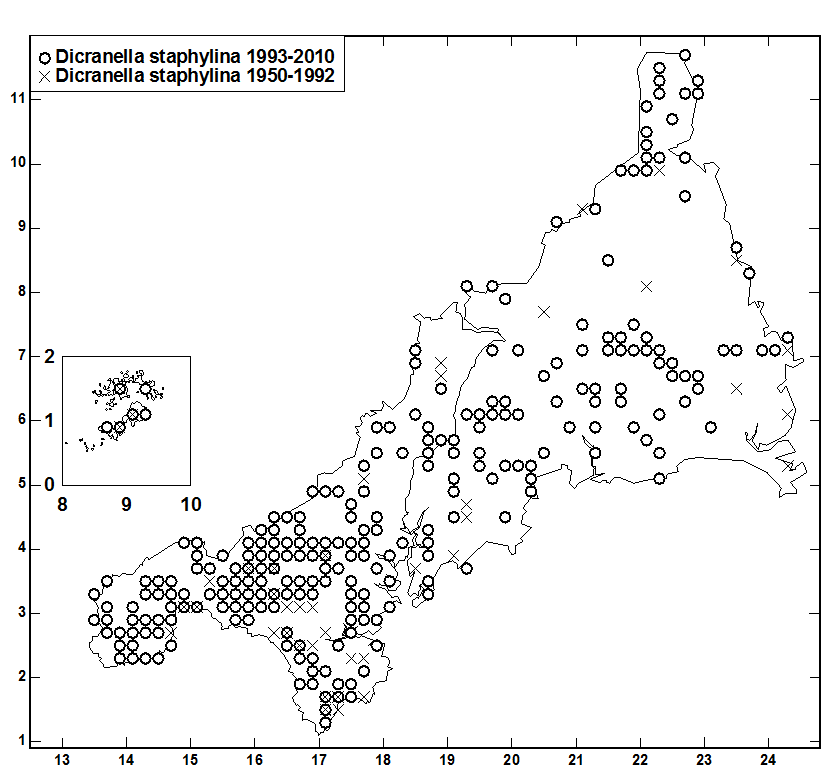
*1: Broccoli field near
Gwinear, Hayle, SW5837, 1966, JAP (BBSUK)
(Paton 1969a: 716, Whitehouse 1969: 765, Crundwell 1970:
197).
*2: Turfy bank of clear
stream, Tregony, SW921447, 1961, JAP (BBSUK)
(Paton 1969a: 716, Whitehouse 1969: 765, Crundwell 1970:
197).
Generally overlooked until a few years prior to its
description by Whitehouse (1969).
Scattered plants, often among other low mosses, or
small patches. Habitat notes from C&S are as follows.
Common as colonist of disturbed mineral soil, typically on
mesic loamy, clay or silty, neutral to somewhat acidic soil
and growing unshaded to lightly shaded (occasionally in
heavier shade under herbs, trees or scrub or along tracks in
plantations). One of the commonest mosses in arable fields
(cereals and their stubble, maize stubble, flax, brassicas,
bulbs and other horticulture, beans, grass-leys, game-bird
food crop, fallow land) both inland and close to cliff edges;
also on partly bare soil patches in grasslands, at base of
laneside banks, on roadsides, around field gateways, on soil
heaps, in gardens, churchyards, on stream banks, dredgings
from ditches, graves, on or beside paths and tracks, and on
exposed sediment beside reservoirs. A few records also from
mine-spoil, 'hard-standing' in caravan park, edge of gravel
car park, on 'hedges' and on soil in old cattle-grazed Grey
Willow-carr. Common or frequent associates include Barbula convoluta, Barbula unguiculata,
Bryum dichotomum,
Bryum rubens, Dicranella
schreberiana, Trichodon cylindricus,
Pseudephemerum
nitidum, Riccia
sorocarpa, Phascum
cuspidatum, Tortula
truncata; others recorded less often include Anthoceros agrestis,
Bryum dichotomum,
Bryum
klinggraeffii, Bryum violaceum, Didymodon tomaculosus,
Entosthodon
fascicularis, Ephemerum serratum, Epipterygium tozeri,
Fossombronia
caespitiformis, Fossombronia pusilla,
Funaria
hygrometrica, Leptobryum pyriforme,
Leptodictyum
riparium, Microbryum rectum, Pohlia wahlenbergii
var.
wahlenbergii, Riccia crozalsii, Riccia glauca, Riccia subbifurca.
Usually also with herbaceous weeds on arable soil, e.g. Cerastium glomeratum,
Lamium purpureum,
Poa annua, Stellaria media, Veronica persica.
Found once on thin soil on bark of felled saplings in wood
pile.
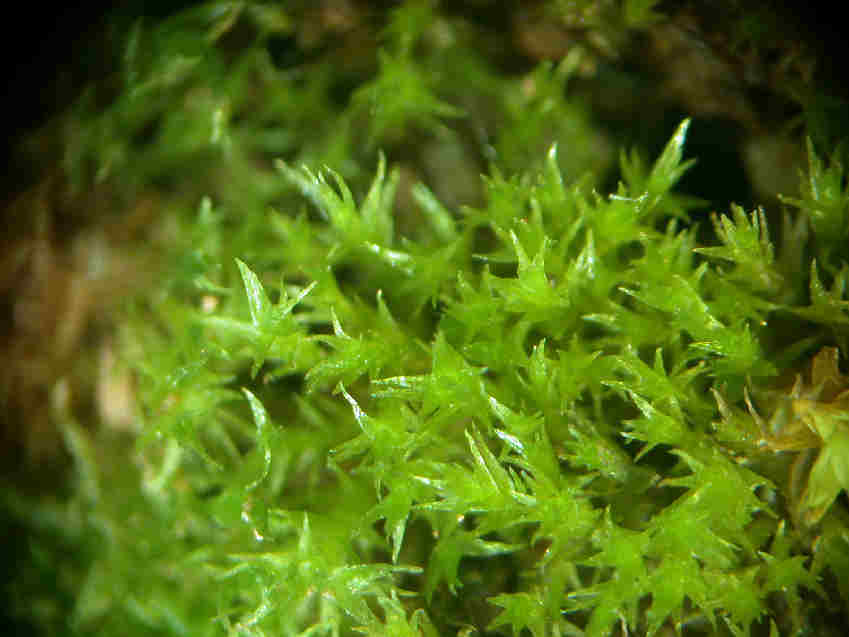
Rhizoidal tubers probably always present. Not seen
c.fr. Female plants with perichaetial bracts: 3, 10. [Atlas
2: 141 noted that most plants in
Britain
are female, with males seen in Yorkshire; sporophytes unknown
in Britain
but recorded in Luxembourg].