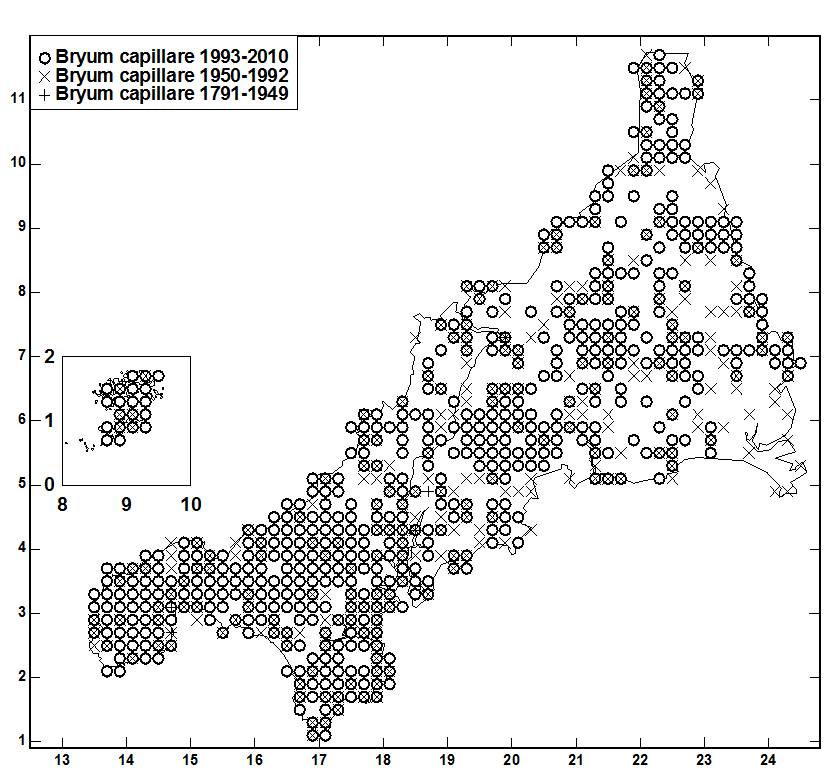
*1: Sunset, Kea near
Truro, 1840, EAW
(TRU) (Paton 1969a: 738). (Vc1 also listed by
Syed 1973, Crundwell 1974: 171).
*2: Trehane, near
Probus, 1861, ES (TRU) (Paton 1969a: 738).
(Vc2 also listed by Syed 1973, Crundwell 1974:
171).
Holyoak (2004) gives reasons for not recognising
subspp. or vars. in B. capillare; var. rufifolium (which is
unknown in Cornwall) is merely an
inconstant form connected by
intermediates.
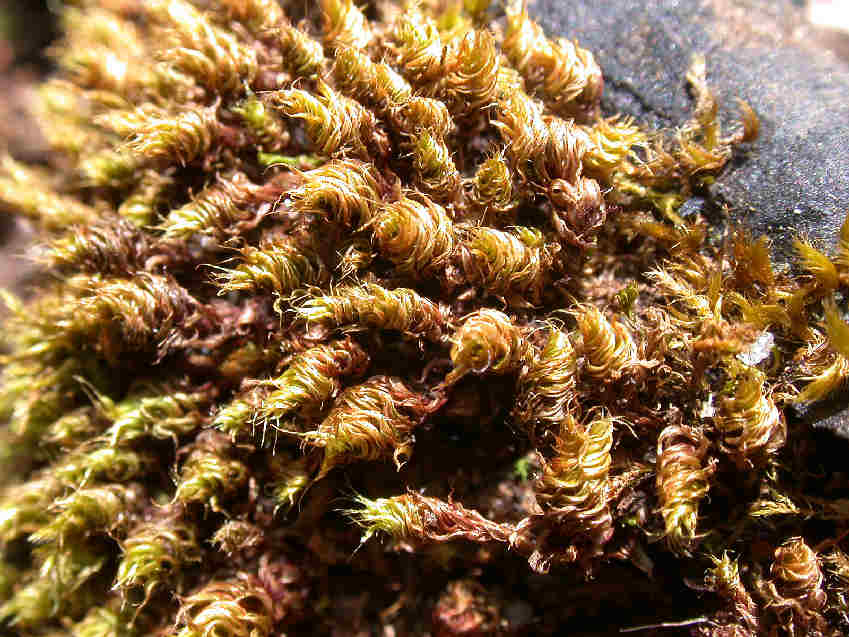
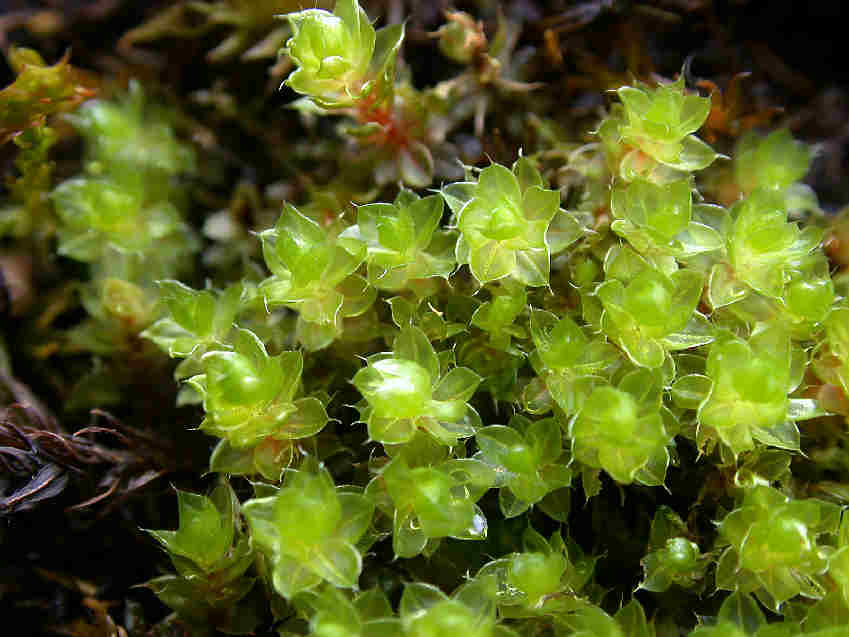
Grows as tufts or cushions which sometimes extend
to form a low lawn. Habitat notes from C&S are as follows.
A common moss that grows on varied substrates and in a wide
range of situations, on soil (loam, sand, gravel, etc.), among
rocks or masonry, on old tarmac, gravel and sometimes on bark,
wood or old thatched roofs; preferring basic or neutral
substrates but also occurring where mildly acidic. Commonest
in dry or free-draining situations and rarely where
persistently damp; in full sun, partly shaded or less often in
moderate or rarely heavy shade e.g. of trees or
walls.
Frequent in varied situations including e.g. among
rocks where often in crevices with little or no soil (gabbro,
granitic, serpentinite, slate; on boulders, tors and walls,
and in quarries and cuttings); on masonry (including concrete,
old mortar, old bricks, asbestos-cement roofs); on marble
chippings on graves; thin soil on ledges of outcrops and on
cliff tops; in guttering of houses; in old quarries; on
'hedges'; also on deeper soil at times, e.g. on a rocky bank
in old mine area, in plant pots, on laneside banks, on banks
in grassland and in barer patches of grassland on calcareous
sand-dunes. Sometimes in exposed places on upper parts of
sea-cliffs and above sea-cliffs as well as in sheltered sites.
The plants on top of exposed sea-cliffs may be dwarfed and
difficult to identify.
Often also as epiphyte, recorded e.g. on bark of
Apple, Ash, Elder, Grey Willow, oaks, Sycamore trunks (once on
sloping 'trunk' of Gorse, once on Cortaderia); also on
decorticated wood of old tree trunks in open. Common on silted
bark of trees in flood zone of R. Tamar and also recorded from
top of a boulder in flood zone of a
stream.
Many associates recorded, reflecting the wide range
of substrates and habitats in which it occurs, including: Sciuro-hypnum
populeum, Bryum
algovicum, Bryum
argenteum, Bryum
dichotomum, Bryum
donianum, Bryum
radiculosum, Didymodon rigidulus,
Grimmia pulvinata,
Grimmia trichophylla
s. l., Hypnum cupressiforme
var. resupinatum,
Leskea polycarpa,
Metzgeria furcata,
Pseudocrossidium
revolutum, Saccogyna viticulosa,
Schistidium
apocarpum, Schistidium
crassipilum, Syntrichia montana, Syntrichia laevipila,
Tortula muralis, Tortula viridifolia,
Trichostomum
brachydontium, Trichostomum
crispulum, Conocephalum conicum;
Sedum anglicum;
rarely Leptodontium
gemmascens, Syntrichia papillosa,
Tortula
cuneifolia.
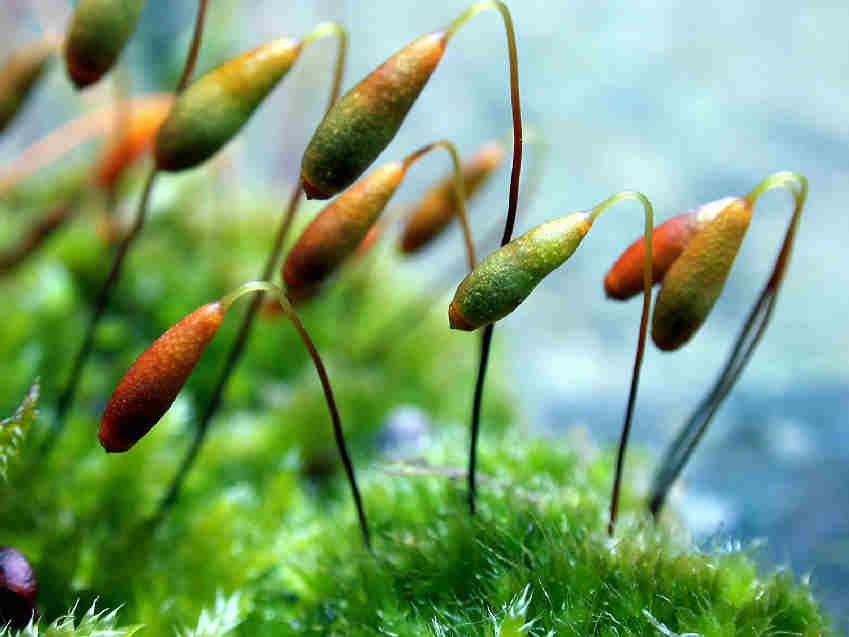
Commonly c.fr.: capsules immature 1-6, 10-12;
dehiscing 6-8; dehisced [old 1-3], 6-8,
10-12.