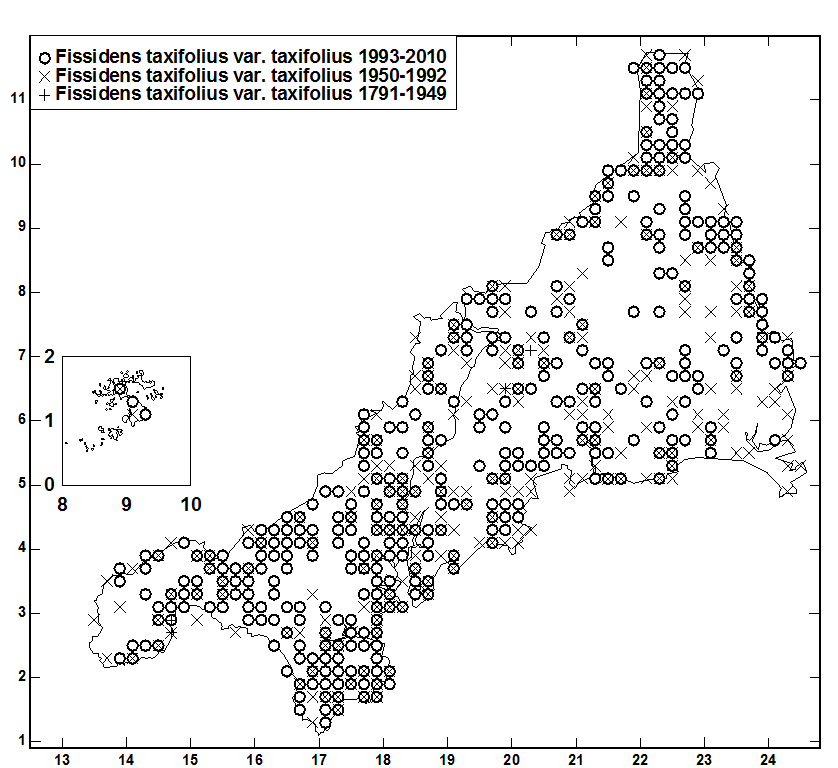
*1: Tolcarne Mill, Newlyn, 1865, WC (PNZ) (Paton 1969a:
713).
*2: Near Croan, Egloshayle, 1888, RVT (B) (Paton 1969a:
713).
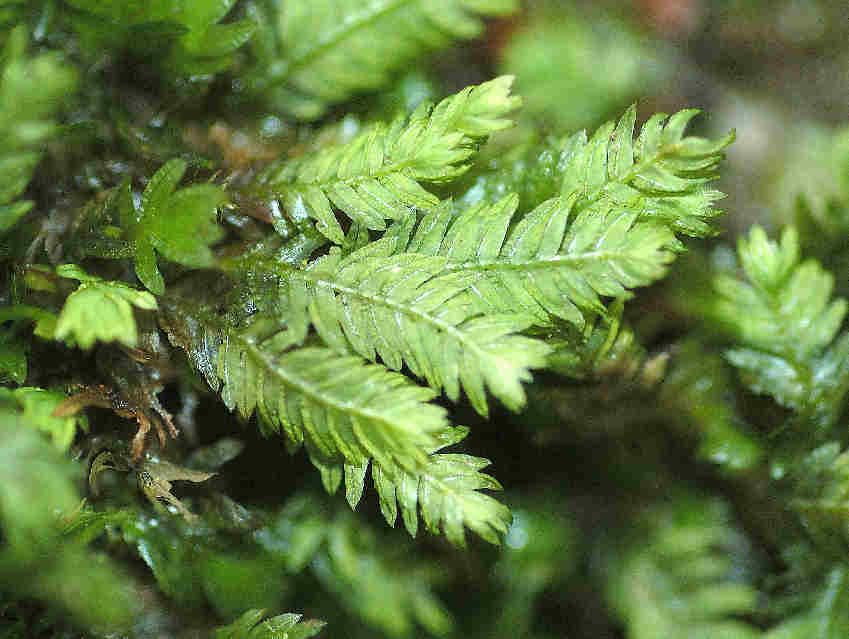
Typically forms rather dense lawns or patches.
Habitat notes from C&S are as follows. Usually on dry to
damp mineral soil (often clayey or loamy) with at least
moderate base content, on horizontal or sloping, less often
vertical surfaces (occasionally on thin soil over rocks or on
old walls). Typically grows where partly shaded or sheltered,
but also occasional in fully insolated sites or in heavy
shade. Often common in deciduous woodland (especially on
slopes or banks), groves of trees, under scrub (including Grey
Willow carr), on banks e.g.
beside lanes, beside ditches, and on stream and river banks
(commonly occurring in zone that is flooded briefly each year)
and in churchyards (including records in short grassland in
sheltered and partly shaded places). Recorded also from a
conifer plantation, roadsides, on 'hedges', hedgebanks and
above sea-cliffs, in cemeteries, on garden soil, and (as young
plants) from bare soil patches in damp unimproved pasture.
Frequent associates include Oxyrrhynchium hians,
Kindbergia
praelonga, Oxyrrhynchium pumilum,
Fissidens bryoides
var. bryoides,
Mnium
hornum.
Atypical records from damp soil in flushes above
sea-cliff, on stone at water-level in stream, on old concrete
near streams, soil inside ruins of old mine engine-house, and
on a soil heap and a spoil bank on old mining
ground.
Single record of plant with rhizoidal tubers in
arable (stubble) field, DTH 05-88, March
2005. Occasionally (frequently ?) c.fr.: capsules immature
1-3, 10-12; dehiscing 1-6; dehisced 3-5, 8, [10
old].