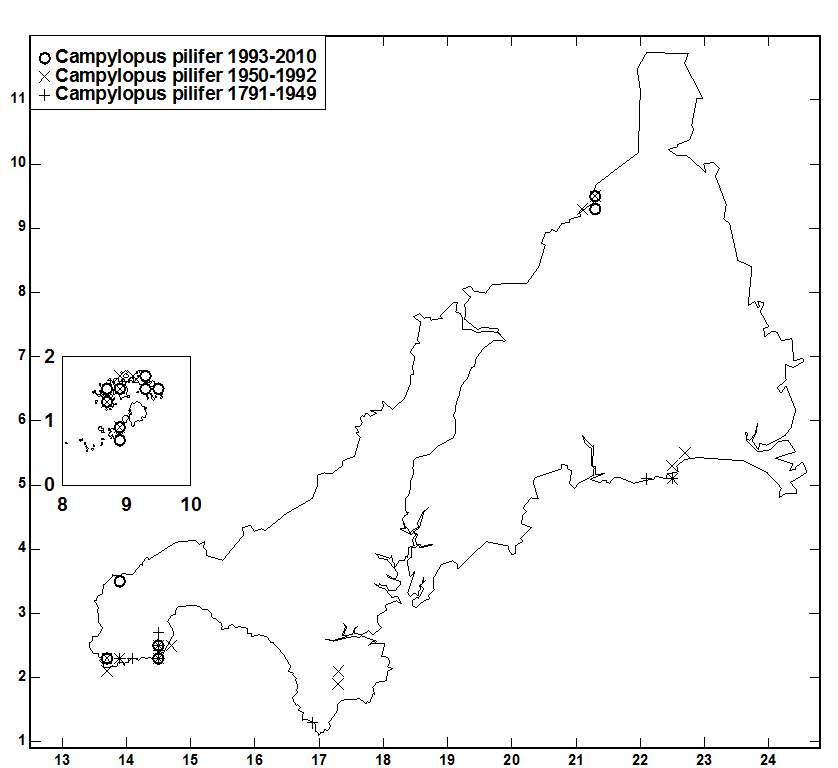
*1: Trungle Moor, Paul,
1860, WC (BIRM) (Paton 1969a:
718).
*2: Near Polperro,
1918, FR (BM) (Paton 1969a:
718).
Forms compact patches on surfaces of granitic and
slaty rocks, thin soil overlying rock and deeper soil
(sometimes sandy) in places that dry in summer. Only found in
unshaded or slightly shaded sites, mainly on and above
sea-cliffs, also on boulders in quarry waste near the coast.
There are usually no close associates, although Campylopus introflexus
sometimes grows with it on thin soil as well as on its own
nearby on deeper soil. Sedum anglicum and low
Calluna vulgaris
have also been noted as growing close
by.
Not seen c.fr. The sSpecies is dioicous and it is
rare for both sexes to occur together (Schimper 1864). Male
plants were first found in Cornwall (Curnow in Schimper 1876) and
may not be known elsewhere in Britain. There are
no British records of sporophytes but they are known in
Ireland
(Hegewald 1973), Spain and Portugal (Giacomini
1955, Richards 1963).