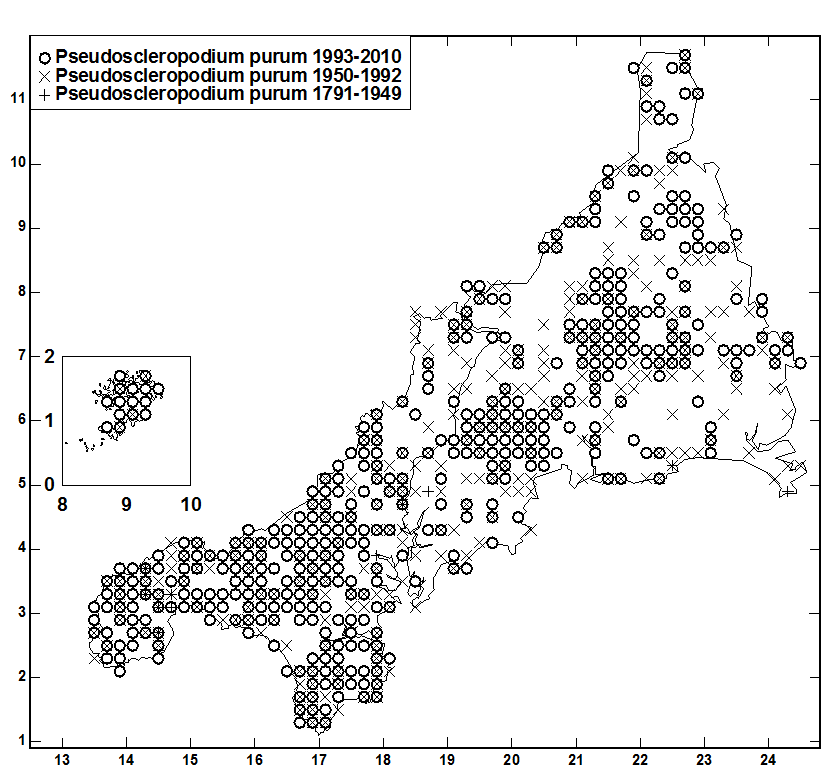
*1: Carclew near
Perranarworthal, 1840, EAW (TRU) (Paton
1969a: 753).
*2: Trehane near
Probus, 1857, ES (TRU) (Paton 1969a:
753).
Habitat notes from C&S are as follows. On
calcareous sand in dune grassland. On soil among grasses on
laneside banks, among concrete ruins, and in old quarries.
Soil at track edges in open beside heathland, in deciduous or
mixed woodland part shaded, sometimes moderately shaded in
open woodland or encroaching scrub. Widespread on soil of
heathy and short grassland areas (common over large areas in
short acid grassland on Bodmin Moor, usually with Rhytidiadelphus
squarrosus; also frequent on roadside verges), on hummocks
in mires, over old 'hedges', ruined walls or wide wall tops,
on graves and in churchyard turf, about tors, thin soil over
old concrete, old metalliferous mine spoil; also sometimes
abundant alone or with grasses under scrub and in part shade
under groves of trees on old mining ground. In and near old
granite and slate quarries, old and working china clay
quarries and their spoil heaps, typically with grasses and at
edge of heathy vegetation but often also as primary colonist
on more open surfaces. Mainly uncommon or absent from exposed
coastal sites, but occasional records e.g. from grassland
above slaty cliffs (abundant near an estuary in this
situation) and in small amounts in short turf on top of
exposed serpentinite sea-cliffs. Sometimes abundant in short
grassland of mown lawns.
Many associates, of which commonest and most
characteristic include Brachythecium
rutabulum, Calliergonella
cuspidata, Hypnum
jutlandicum, Polytrichastrum
formosum, Rhytidiadelphus
squarrosus, Thuidium tamariscinum
and grasses, often also Pleurozium schreberi,
Rhytidiadelphus
triquetrus, Calluna
vulgaris, Vaccinium
myrtillus.
Rarely c.fr. (three records: few dozen capsules on
sheltered china-clay spoil near Carthew, vc2; several capsules
near Rock, vc2; one record of single capsule, Praa Sands,
vc1): capsules immature 1, 11; dehiscing 12, dehisced
1.