*1:Penzance, 1866, WC, conf.
ACC (E) (A.C. Crundwell in litt. 6 Sep. 1996, Crundwell &
Smith 2000: 47).
*2: St Nighton's [= St
Nectan's] Kieve, Boscastle, 1886, HND conf. ACC
(BM) (A.C. Crundwell in litt. 6 Sep. 1996,
Crundwell & Smith 2000: 47).
See notes under H.
heteropterum
var. heteropterum
above.
Grows as scattered stems among other bryophytes or
forming low mats. Notes on habitats in Cornwall are as
follows. Acidophilous, occurring on rocks (mainly granitic;
found once on slates, once on masonry of a sluice), crumbling
rock or thin soil among rocks, at water-level or not far above
it in and beside streams and small rivers; part shaded by
trees, Grey Willow-carr or banks, shaded by deciduous woodland
or its edges, or less often almost unshaded. Associates
recorded include Sciuro-hypnum
plumosum, Fissidens
bryoides var.
caespitans,
Lejeunea lamacerina, less often Fissidens polyphyllus,
Heterocladium
heteropterum var.
heteropterum. An unusual record from the Mousehole, on
flushed near-vertical rock in the shaded interior of the deep
sea cave.
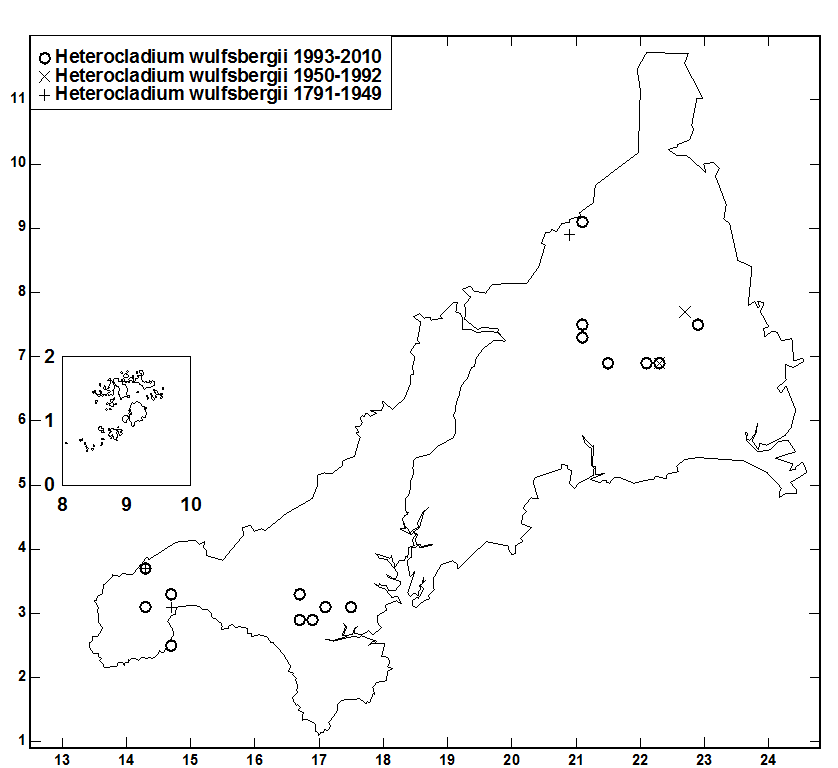
At four localities in Cornwall
(S. of Treloquithack, Draynes Wood, Hendergrove Wood, NE. of
Waterloo) H. wulfsbergii has been
found close to H. heteropterum var. heteropterum but
apparently remaining distinct from it. At each of these
stations H. wulfsbergii appears
closely confined to stream or river edges (within the
regularly flooded zone or extending a little higher) whereas
H. heteropterum var. heteropterum occurs
both near water (usually above the flood-zone) and widely on
slopes or wooded hillslopes above.
Not seen c.fr.