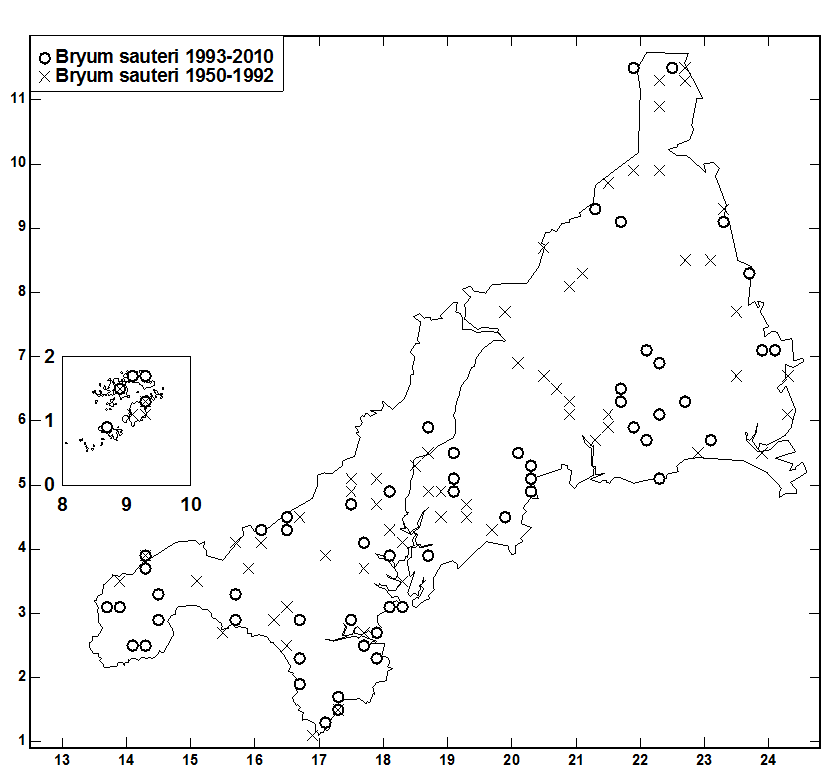
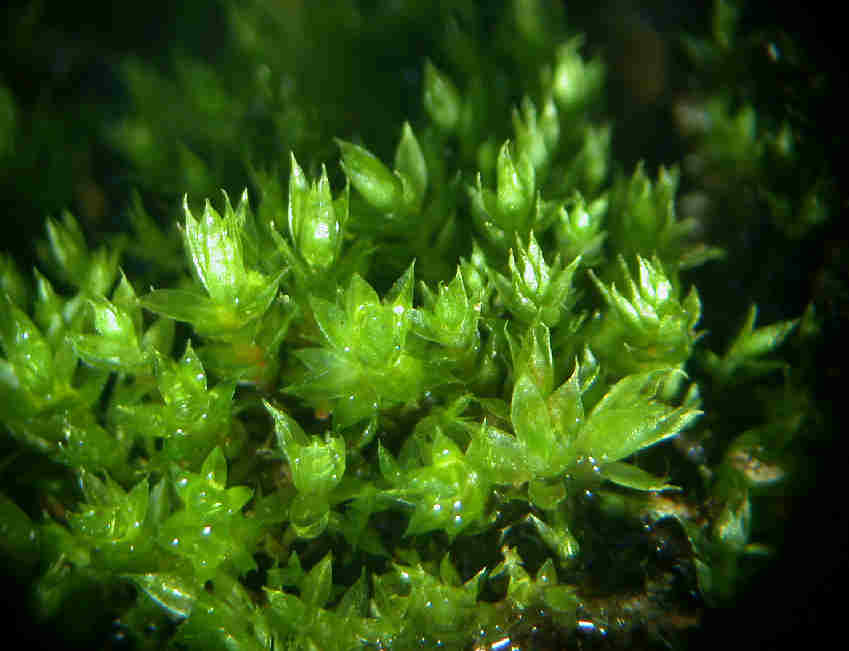
Grows as scattered plants or forms small tufts,
infrequently as larger patches (short lawns). Habitat notes
from C&S are as follows. Normally grows on circum-neutral
or somewhat acidic soil (often loamy, occasionally clayey,
sandy or gritty; sometimes compacted or compressed) in partly
bare areas or open patches in mainly free-draining to damp or
occasionally rather wet sites. It occurs in open sunny places
but more often where sheltered and lightly or partly shaded.
The species is mainly a colonist of disturbed soil or soil
patches which become unsuitable as larger plants colonise and
shade it out, e.g. beside a badger sett, bare patch in a
grass-ley, on soil dug from small ditch.
Recorded mainly on banks (beside lanes, at
deciduous woodland edges, above streams, beside a spring, edge
of disused railway embankment) and 'hedges', also soil heaps,
edge of a gravel car park, soil over old concrete, cemeteries,
churchyards, on or beside old tracks, on paths, in a field
gateway, beside a cliff-top flush, on N.-facing sea-cliffs and
in cleared woodland. Not recorded from arable fields in
Cornwall until CDP detected
it on stubble fields in several different places in 2005-2006
during a detailed study of bryophytes on arable land. CDP
found it mainly in small quantity but occasionally frequent
(e.g. in two fields in barley stubble on loam, pH 5.7, 6.0).
It was apparently rare in a wheat stubble on loam (pH
6.2).
Associates recorded (all habitats combined) were Bryoerythrophyllum
recurvirostrum, Bryum rubens, Dicranella
rufescens,
Dicranella staphylina, Didymodon
insulanus,
Trichodon cylindricus, Ephemerum serratum
s. l., Epipterygium
tozeri, Fissidens
bryoides var.
bryoides, Fissidens
bryoides var.
caespitans,
Fissidens exilis,
Fissidens viridulus, Fossombronia
pusilla, Funaria
hygrometrica,
Physcomitrium pyriforme, Pleuridium
acuminatum,
Pleuridium subulatum, Pogonatum sp., Pohlia lutescens, Tortula truncata, Conocephalum
conicum.
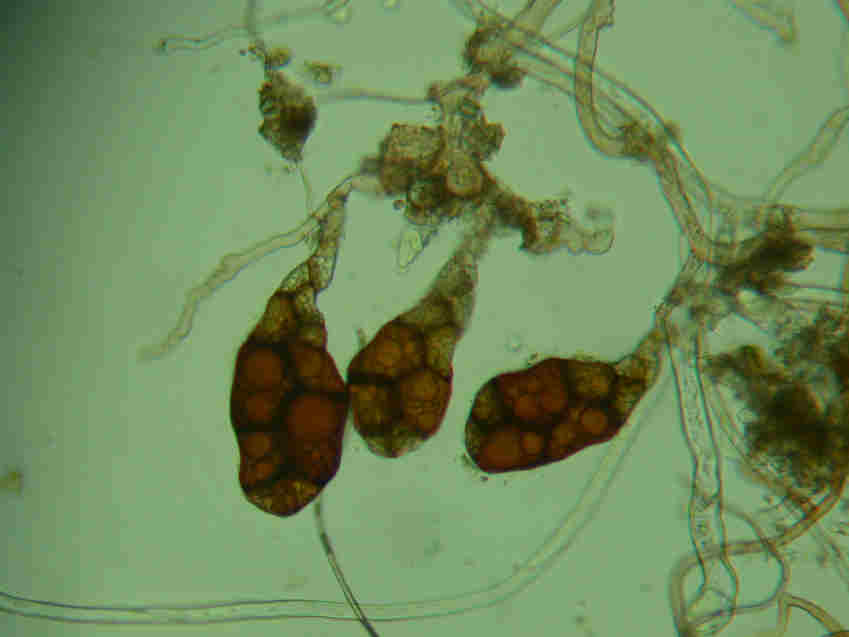
Apparently always with abundant rhizoidal tubers
(although unidentifiable without them). Numerous plants from
stream bank near Trewoofe studied in Apr. 2006 had the upper
stem very fragile, so that the leafy shoot tips were
deciduous.
Not seen c.fr. Normally thought to be dioicous in
Britain
. Female
inflorescence seen: 4. CDP made the first record for
Britain
of plants
with synoicous inflorescences from a stubble field N. of
Bosence Farm (E. of Relubbus) in March 2005 (in Hill 2005:
45).