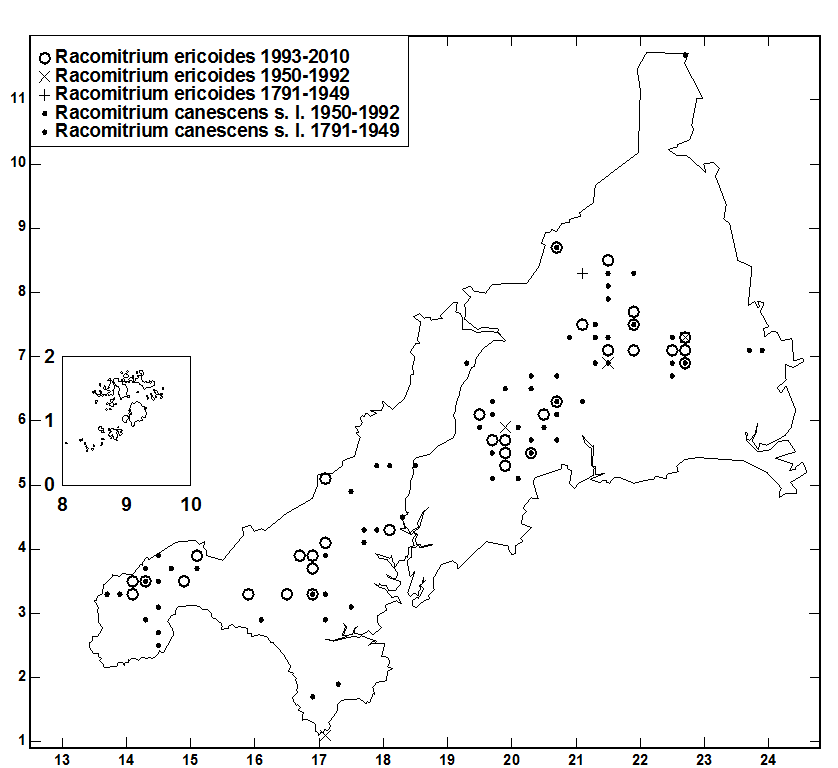
First vice-county records of R. canescens s.
l.
*1: Mean Rock, N. of
Constantine, 1838, EAW (TRU) (Paton 1969a:
730).
*2: Nanstallon Downs,
Bodmin, 1892, RVT (B) (Paton 1969a:
730).
First vice-county records of R.
ericoides:
*1: On gravelly track,
Lizard Point, 1984, HvM & JAP (Hill
1985: 25).
*2: Slate quarries,
Camelford, 1886, HND (NMW) (Hill 1978: 20,
1984a: 24, 1984b: 28).
The taxonomy of the R. canescens s. l. [23/11-13] was
revised by Frisvoll (1983); Hill (1984a) revised the British
vice-county records. Older records that have not been revised
recently are listed as the s.
l.
Forms patches or low to almost tall turfs. Habitat
notes from Cornwall are as follows. Normally on acidic, mainly
sandy or gravelly soil, commonly on compressed soil on less
disturbed parts of paths and tracks and often on damp ground.
Recorded on heathland, in and near old quarries, in old
metalliferous mine areas and in china-clay pits and among
their spoil. Grows in open or only slightly shaded. Normally
grows on soil rather than rock, but recorded once on thin soil
overlying quarried slaty rock and a few times growing directly
on rock of surfaces of granitic boulders in areas of
china-clay spoil. Sometimes locally dominant and forming
substantial patches. Associates recorded include Archidium
alternifolium, Campylopus
introflexus, Calliergonella
lindbergii, Philonotis fontana, Pleurozium schreberi,
Pohlia annotina, Pohlia drummondii and
short grasses and herbs.
Not seen c.fr. in recent years (Paton 1969: 730
notes 'rarely c.fr' for R. canescens in
Cornwall, which would refer to the present
species).