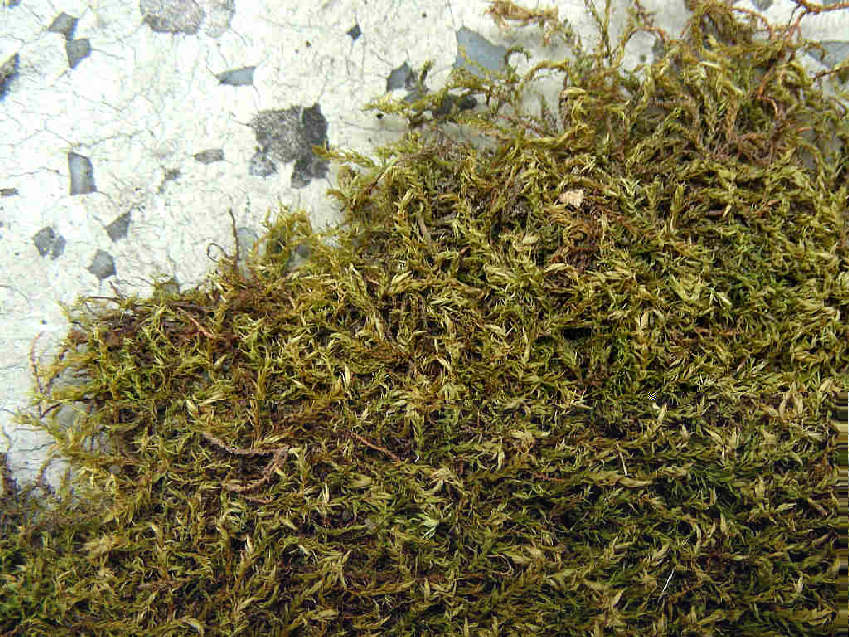
Photo
by Dr M Lueth ©.
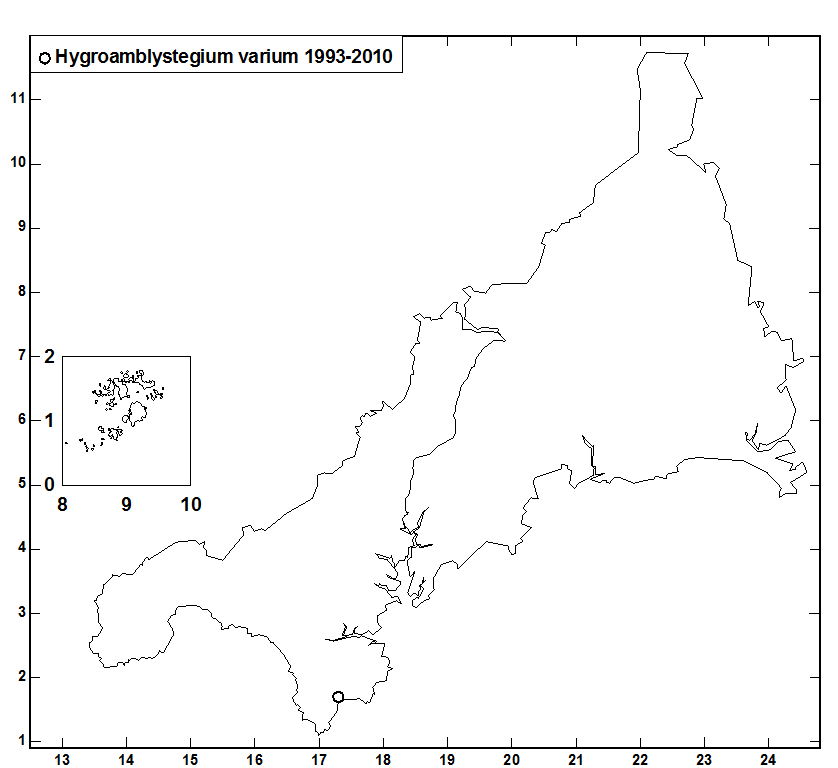
*1: On boulder in small
fast-flowing stream in deciduous woodland, Gwendreath, Lizard,
SW71, 1994, DTH 94-406, conf. AVS, GPR (BBSUK,
DTH) (Rothero 1999b: 46). [Earlier report (Paton
1969a: 747) from 'damp hollow on cliffs, Pendeen Watch,
SW3835, 1962, JAP-1927 (E) is probably based
on Cratoneuron
filicinum det. JAP, conf.
DTH (Rothero 1999b: 46)].
[A record from vc2 (Bodmin, RVT, in Tellam 1888)
was dismissed as doubtful because no specimen was located
(Paton 1969a: 747, Crundwell 1970:
209)].
Only the single record from Cornwall given above is
now accepted: Gwendreath (Lizard), on steeply inclined surface
of boulder just above water-level in small quick-flowing
stream, shaded by deciduous woodland, with a little Platyhypnidium
riparioides.
Not seen c.fr.
Vanderpoorten (2004) argued from cultivation
studies and molecular data that the morphological characters
of the three species usually recognised within Hygroamblystegium (H. fluviatile, H. tenax, H. varium) result from
'plasticity, accelerated evolutionary rates with little
phylogenetic association'. He therefore treated all three taxa
as forms of H. varium. On that basis, the first vice-county records inCornwall of A. varium sensu lato would be as
follows:
*1: Stone in stream
below Trelowarren Mills, Mawgan, near Helston, May 1962, JAP
(BBSUK) (Warburg 1963b: 501, Paton 1969a:
747).
*2: Camel R.,
Dunmere, 1879, RVT (B) (Paton 1969a:
747).