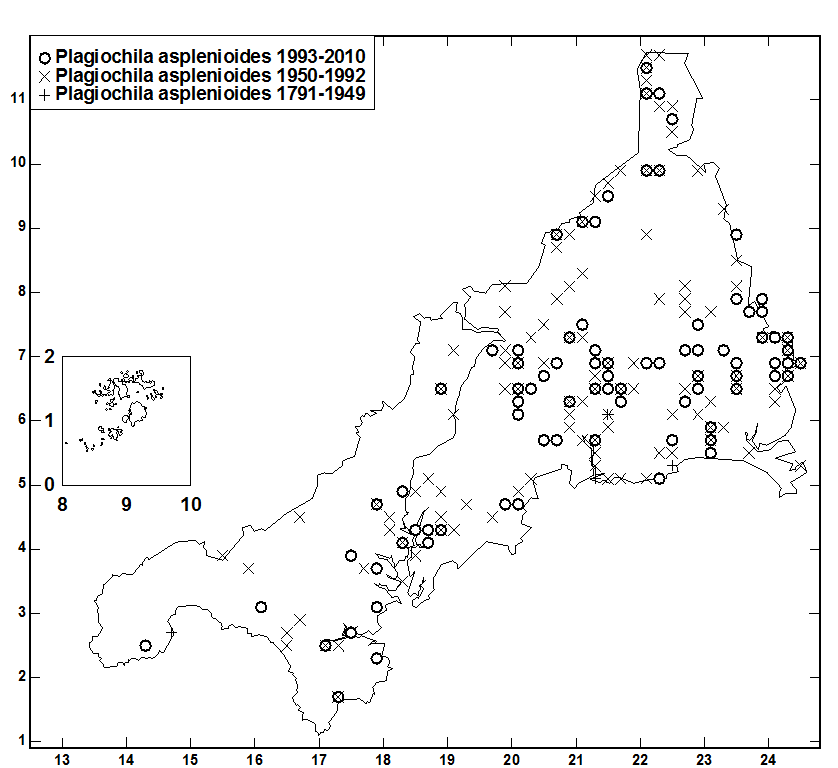
*1: Carn Gwavas,
Newlyn, 1882, WC (NMW) (Paton 1969a:
699-700). This record is much older than that published as new
to vc1 by Paton (1962: 360).
*2: Boconnoc, near
Lostwithiel, 1791, EF (BM) (Paton 1969a:
699-700).
Separation from P. porelloides often
seems rather arbitrary in practice, based on little more than
larger size of P. asplenioides and lack
of flagella.
Habitat notes from Cornwall are as follows. Forming
patches with moss carpets on steep or vertical granite or
slate of crags and boulders or steep soil of banks, in shade
of deciduous trees on hillsides (and once in valley bottom),
in deciduous woodlands, especially near streams and on shaded
'hedges', old walls and laneside banks; sometimes with Bazzania trilobata, Eurhynchium striatum,
Scapania gracilis,
Thuidium
tamariscinum. In grassland with herbs and other bryophytes
on damp soil of steep sheltered bank just N. of Poundstock
Church. Locally plentiful on silty loam under trees on top of
banks beside R. Tamar. On steep thin soil and damp slaty rocks
in shade in disused railway cutting and on roadside or
laneside banks (associates include Oxyrrhynchium hians,
Kindbergia
praelonga, Oxyrrhynchium pumilum,
Homalia
trichomanoides, Plagiochila
porelloides, Thamnobryum
alopecurum). Shaded bank in churchyard. Among rocks in
deep sheltered hollow inside ruin of old mine building (with
Homalia
trichomanoides). On shaded masonry of old railway bridge,
growing among Neckera
complanata.
Not seen c.fr.