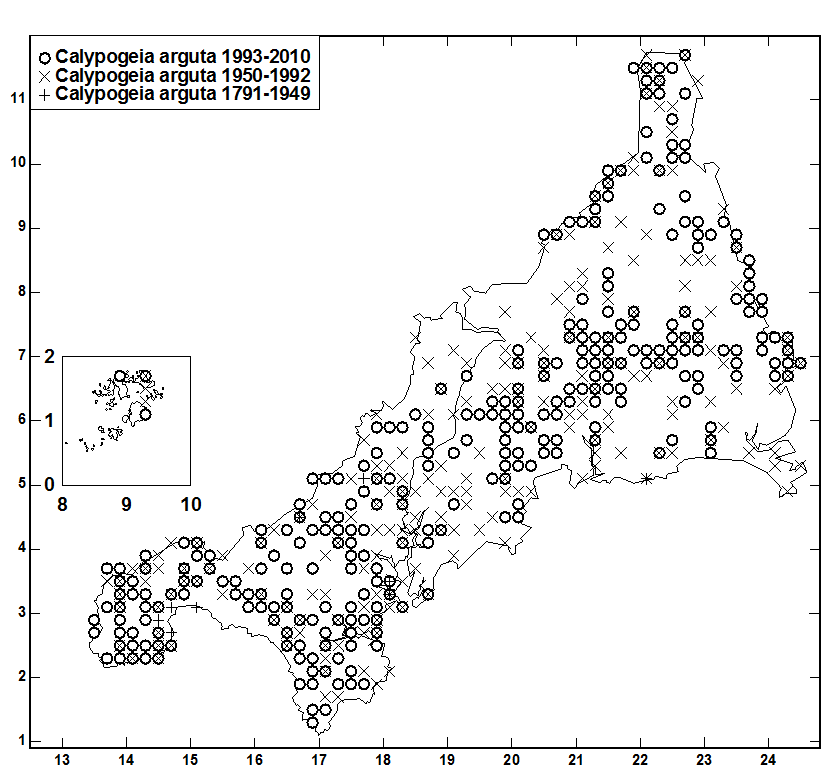
|
*1: Trefusis Grove,Falmouth, 1844, EAW (TRU) (Paton 1969a: 696).
*2: Frogmore, N. of Truro, 1963, JAP (BBSUK) (Paton 1969a:
696). [Older report (Polperro, in Rilstone 1918) not supported
by specimen - Paton 1969a: 696].
Forms low patches, sometimes extensive, or grows
intermixed with other small bryophytes. On circumneutral to
acidic soil (often loamy or clayey, or hard and rocky) on
banks (characteristically where vertical or under small
overhangs) in woodland (deciduous and conifer), groves of
trees, scrub, lanesides, low on 'hedges', in old quarries,
near old mine shafts, beside streams and ditches, on slopes
and flushes on cliffs and above coast, usually at least partly
shaded and sometimes in heavy shade beneath overhangs or in
entrances to animal burrows. It often forms extensive almost
pure patches. Common associates include Calypogeia fissa, Cephalozia
bicuspidata, Dicranella
heteromalla, Diplophyllum albicans,
Kindbergia
praelonga, Fissidens bryoides
var. bryoides,
Mnium hornum, Pogonatum aloides, Pseudotaxiphyllum
elegans, occasionally with Cephaloziella turneri,
Epipterygium
tozeri, Fissidens
celticus, Fissidens
polyphyllus, Solenostoma
gracillimum, Rhabdoweisia
fugax and Schistostega
pennata
.
Other records from peaty or humic banks and
decaying tussocks in heathland, mires and acidic flushes (near
or with Calypogeia
fissa, Calypogeia
muelleriana, Cephalozia
bicuspidata, Diplophyllum
albicans). On decaying litter low on Molinia caerulea tussocks in
mire (with Calypogeia
fissa, Calypogeia
muelleriana, Cephalozia
bicuspidata, Cephalozia connivens,
Riccardia
latifrons). Acid soil of vertical path-side bank,
part-shaded only (with Calypogeia fissa, Cephalozia
bicuspidata). Above sea-cliffs on acid soil on banks and
in and sheltered rock crevices; a bit very low on exposed
sea-cliff on steep soil in small sheltered
hollow.
Very commonly with gemmae. Not recorded
c.fr.
|
|