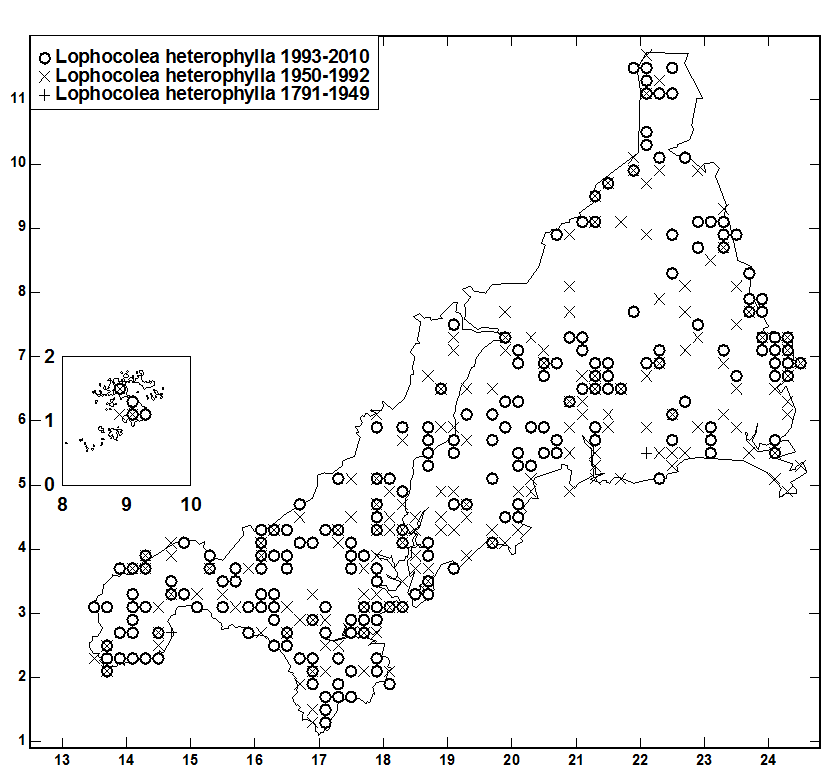
*1: Newlyn Cliffs,
1840, WC (OXF) (Paton 1969a:
700).
*2: Trelawne, Looe,
1924, FR (BM) (Paton 1969a:
700).
Forms patches or mats. Habitat notes from C&S
are as follows. Common on rotting wood of decorticated tree
stumps and trunks and logs lying above or on or near ground in
deciduous and conifer woodlands, or groves of trees, also in
Grey Willow scrub. On dead gorse stem on heath. Patch 1.5 m
above ground on large living branch of Grey Willow in carr. On
low, horizontal, living Alder trunk in wet woodland. Base of
trunk of old pine tree, base of trunk of living Pinus radiata in
plantation. Patches on near-vertical, dry soil high on
'hedges' at top of sea-cliffs, in open on north side of
'hedge' or slightly shaded by grasses. In slight hollow on
slope above exposed sea-cliff. Soil, slightly sheltered, of
low banks above sea-cliffs. Crevice of rocks at top of
sea-cliff. On unshaded rock and soil among rocks on slopes in
pastures above coast. Often found on soil on banks and
'hedges' inland (also on thin soil over slaty rock on bank
and in quarry)
commonly where shaded and often on free-draining substrates,
also among roots of wind-thrown tree. Twice on thin soil on
old walls. Other habitats include churchyards, laneside banks,
ruins of mine buildings, deciduous woodland and groves.
Occasionally with mosses and other small liverworts on steep
side of serpentinite or granitic boulders in shade. Bit with
moss and liverwort carpet on moist vertical masonry of old
wall. Patch on vertical rock of unshaded boulder close to
stream. Associates recorded on soil Lejeunea lamacerina,
Lophocolea
bidentata, Plagiothecium denticulatum
var.
denticulatum, rarely Lophocolea fragrans;
on rotting wood sometimes with Hypnum andoi, Hypnum cupressiforme
var.
resupinatum, Lophocolea bidentata,
Pseudotaxiphyllum
elegans, less often with Nowellia
curvifolia.
Once with many foliar gemmae (Nov:
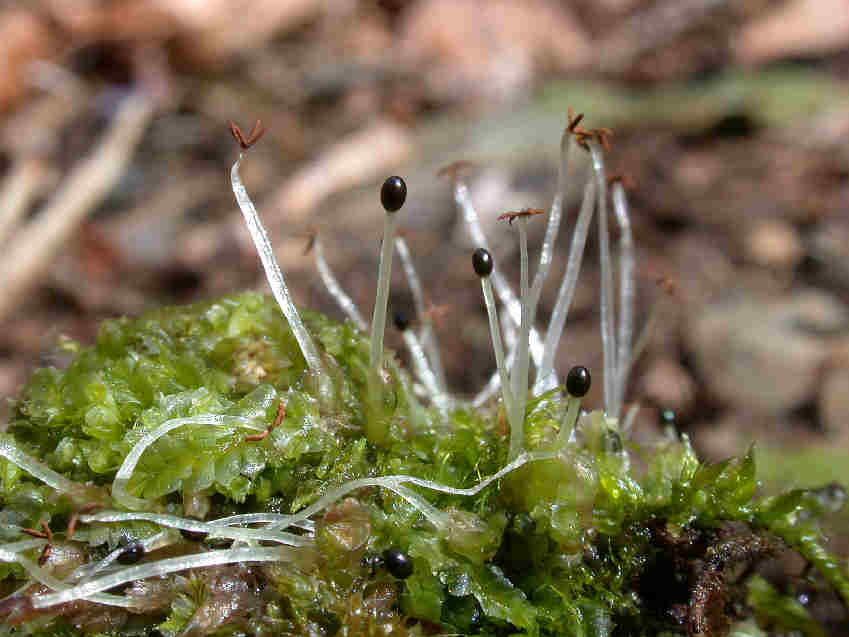
DTH). Commonly c.fr.: recorded c.per. (1-3,
7, 11, 12); capsules immature 1-5, 12; dehiscing 1-3, 5;
dehisced 2-5.